Bedroom speakers you never see.
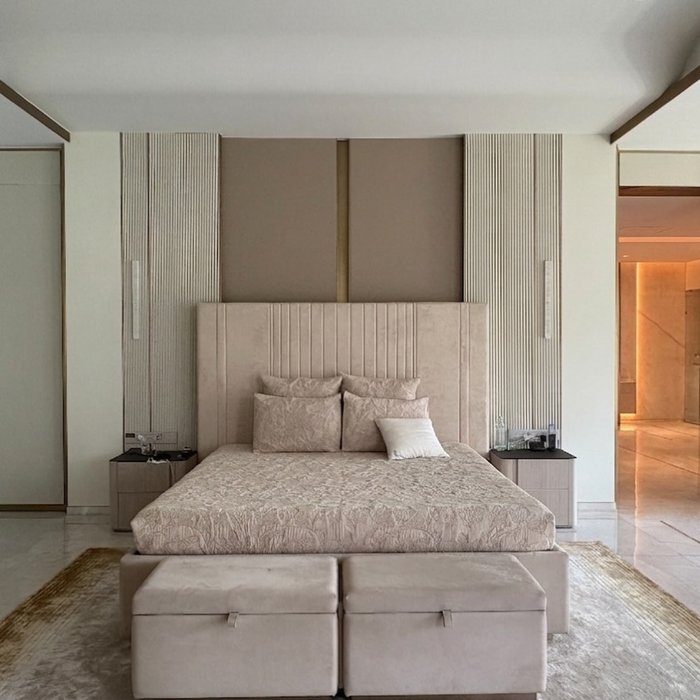
Bedrooms and dressing rooms are where discretion matters most and available depth is smallest — wardrobe doors, lacquered panels and upholstered walls offer millimetres, not centimetres.
What makes a bedroom different
The surfaces have no depth to give
A wardrobe door, a fluted velvet panel or a lacquered millwork face cannot accept a conventional speaker cavity without compromising its structure or its finish. At 12mm, Bonsai sits almost flush against surfaces no ordinary architectural speaker can use at all — which is usually what makes the installation possible.
Soft furnishing changes the acoustics
Beds, curtains, rugs and upholstery absorb rather than reflect, so a bedroom has a much shorter reverberation time than a marble living room. Less energy comes back to the listener, but the room is also far more forgiving — high output is rarely the requirement.
What the next room hears matters
A bedroom system is used at low level, late, next to rooms where people are sleeping. Speakers radiating into an open building cavity transmit sound structurally into adjacent spaces; a back box contains that and is worth specifying here more than almost anywhere else.
What we’d specify here.
Bonsai
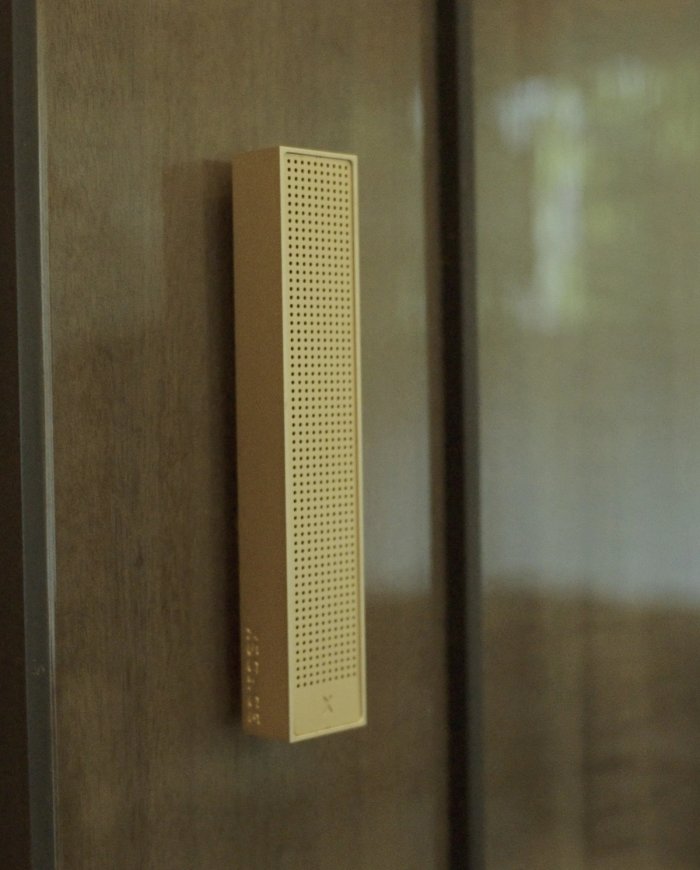
The thinnest in the range at 12mm — 40W RMS, 86dB, 300Hz–18kHz. Fits lacquered wardrobe doors and panelled walls, and at 22mm wide it sits within a single flute of a reeded panel.
View Bonsai →QuadCane
Where a bedroom is larger or doubles as a media space, 21mm buys 100W RMS at 95dB and a fuller 150Hz–20kHz range.
View QuadCane →Acacia 6 Powered
Bonsai stops at 300Hz, so a subwoofer carries proportionally more of the range than usual. Acacia 6 covers 35–300Hz and can sit in an adjacent cavity rather than the bedroom itself.
View Acacia 6 Powered →Air Amp
Streams wirelessly and drives the passive speakers directly at 80W RMS per channel — no separate source, and no rack equipment in a bedroom.
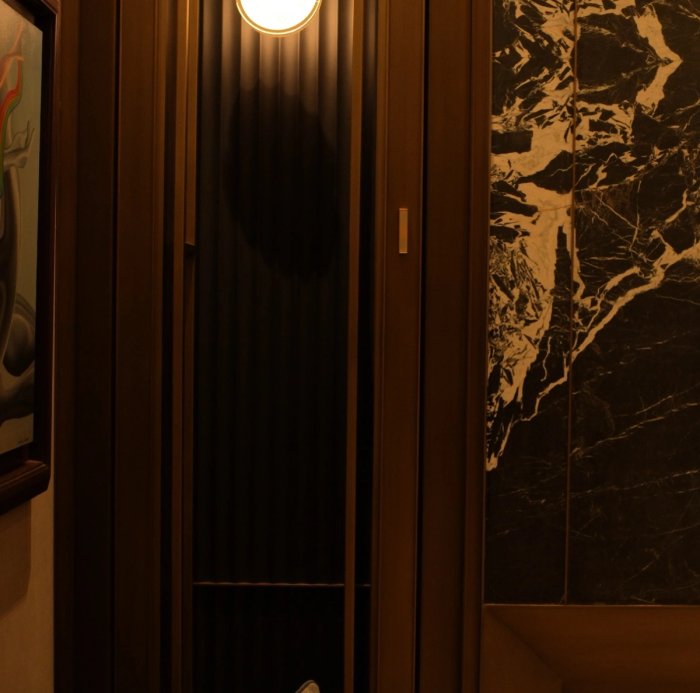
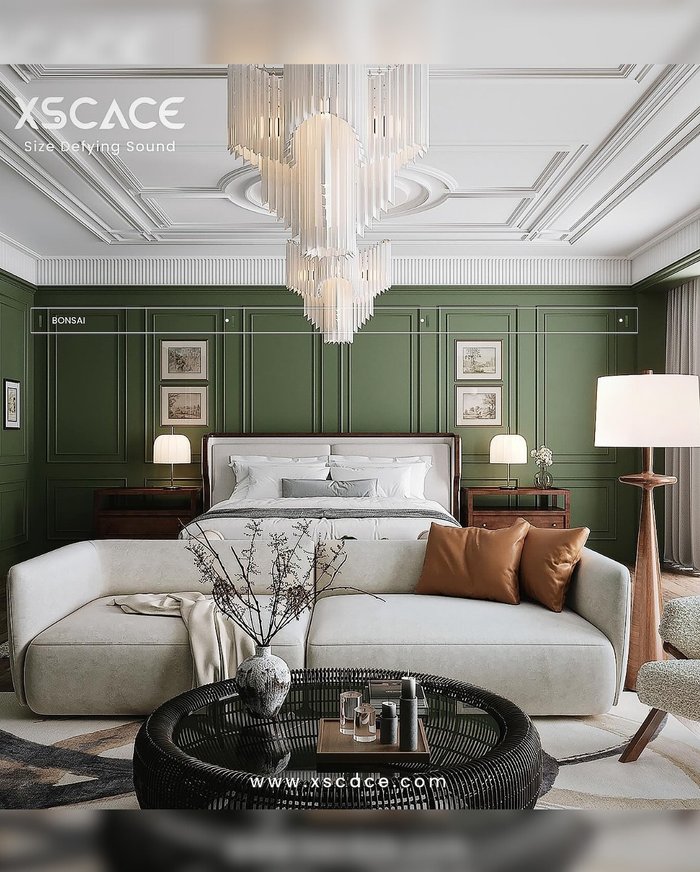
View Air Amp →Real bedroom & dressing installations.
Bedroom & Dressing questions.
What is the thinnest speaker for a bedroom wall?
The XSCACE Bonsai requires 12mm of mounting depth — 40W RMS, 86dB sensitivity, 300Hz–18kHz at 8Ω. The in-ceiling/in-wall variant requires 13mm. That is shallow enough for wardrobe doors and panelled surfaces that cannot take a conventional cavity.
Can speakers be mounted on wardrobe or cabinet doors?
Yes, provided cable routing accounts for the door swing and hinge clearance and is run through the door cavity rather than surface-run. Shallow depth matters as much for the cable channel as for the visible face.
How do I stop bedroom speakers being heard in the next room?
Fit a back box. Without one the speaker radiates into the open building cavity, which transmits sound structurally into adjoining rooms. A sealed rear enclosure also makes bass more consistent.
Does a bedroom system need a subwoofer?
If you are using Bonsai, effectively yes — it covers 300Hz upward, so a subwoofer carries more of the musical range than in a typical system. The Acacia 6 Powered can be sited in an adjacent cupboard or void to save room volume.