Home cinema speakers, built into the room.
A dedicated cinema is the one room where architectural speakers are not a compromise but the correct engineering answer — the speakers belong behind the screen and inside the walls, where a freestanding cabinet could never sit.
What makes a cinema different
LCR must sit at ear height, behind the screen
Left, centre and right should be level with the seated listener and directly behind an acoustically transparent screen, so dialogue comes from the actor rather than from below or above the image. This is only possible with in-wall speakers, and it is decided at rough-in — once the screen wall is built, the position is fixed.
Headroom is not optional
Reference cinema level demands sustained output that background-music speakers cannot deliver without compression. Oak handles 350W RMS at 90dB down to 40Hz; Willow handles 300W RMS at 88dB down to 45Hz. Running a smaller speaker harder does not substitute for a speaker with genuine reserve.
Multiple subwoofers beat one large one
Bass problems in a cinema are room modes — standing waves created by parallel surfaces producing seats with too much bass and seats with almost none. Distributing several subwoofers around the room evens the response across all seating far more effectively than one larger subwoofer ever can.
What we’d specify here.
Oak
The LCR choice: 350W RMS, 90dB, 40Hz–22kHz at 4Ω in 135.9mm of wall depth. Sized for reference-level playback behind an acoustically transparent screen.
View Oak →Willow
Surround duty: 300W RMS, 88dB, 45Hz–22kHz at 8Ω in 110mm. Matched tonally to Oak so a pan from screen to side wall stays coherent.
View Willow →Ghost 2.0
Atmos height channels — 80W RMS, 92dB, 187.96mm ceiling depth, positioned to Dolby angle guidance relative to the primary seat rather than the room centre.
View Ghost 2.0 →Juniper
12-inch powered subwoofer, 350W RMS, 92dB, reaching 25Hz. Deploy several around the room rather than one, to average out room modes across every seat.
View Juniper →Real home cinema installations.
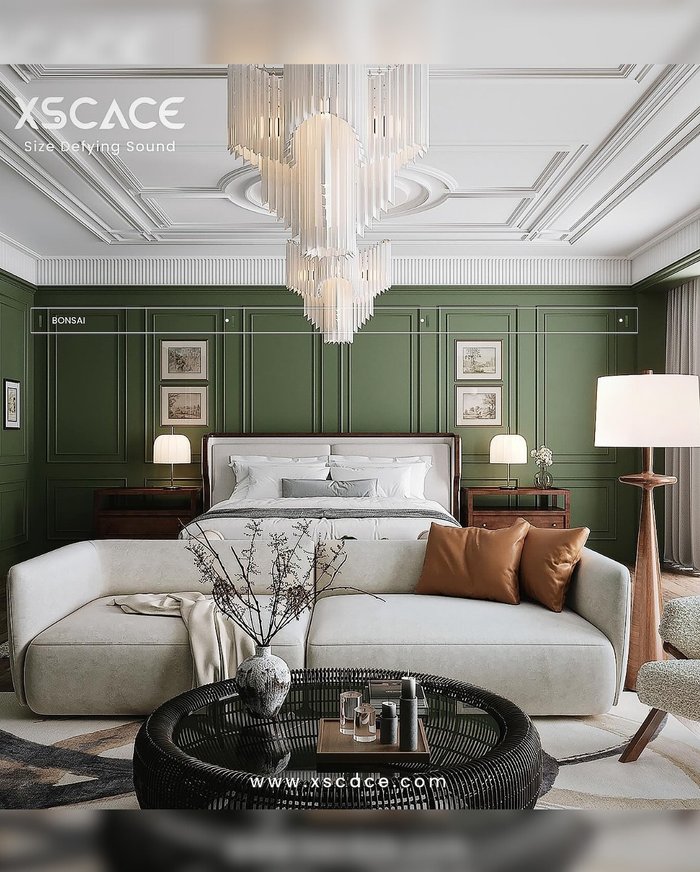
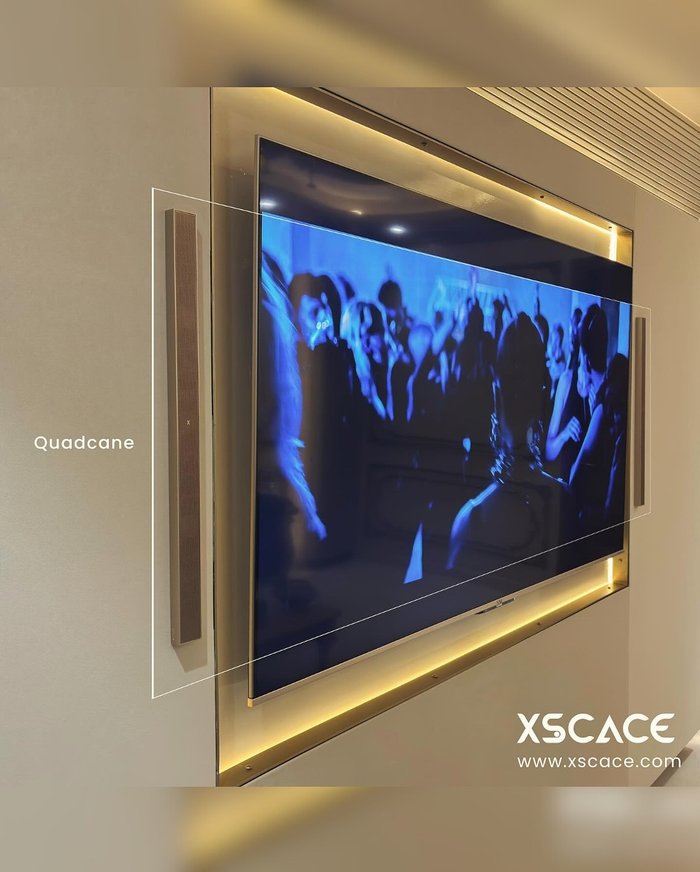
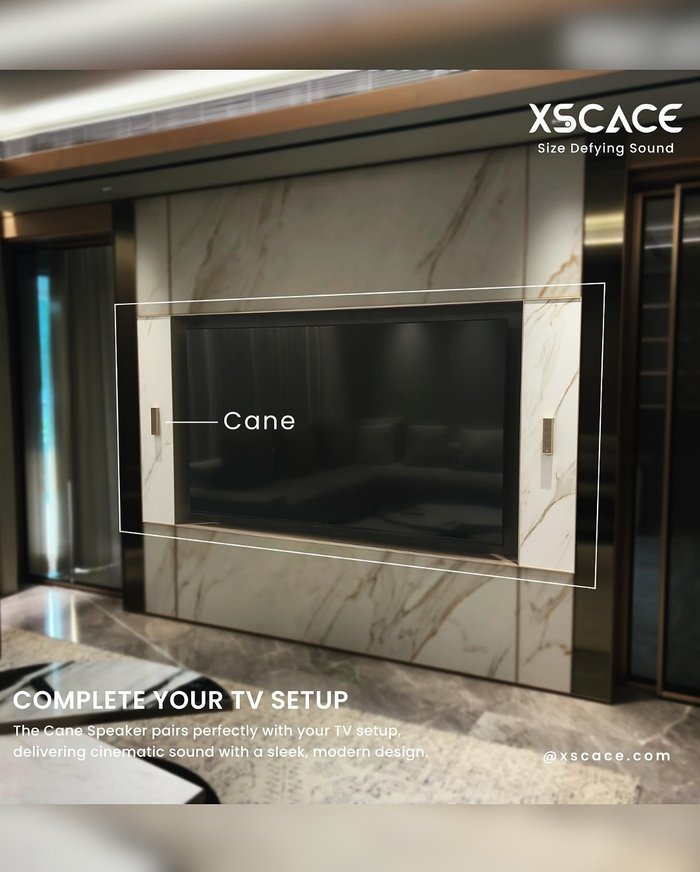
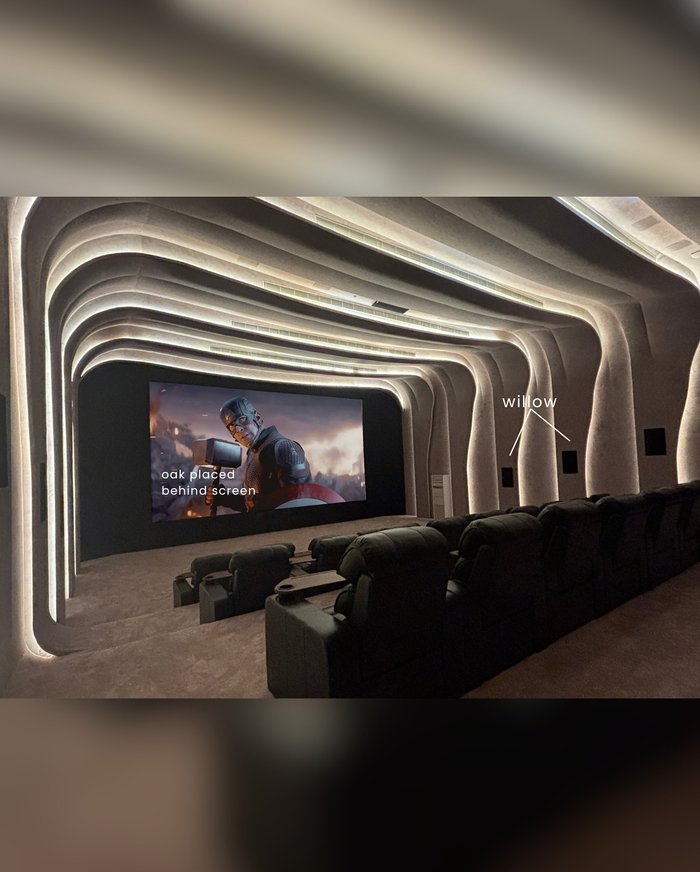
Home Cinema questions.
Can in-wall speakers deliver real home cinema performance?
Yes, and for LCR they are the preferred answer, because they allow the speakers to sit at ear height directly behind an acoustically transparent screen. XSCACE Oak handles 350W RMS down to 40Hz — comparable to substantial freestanding speakers, without the cabinet.
What speakers go behind an acoustically transparent screen?
The left, centre and right channels. The screen material passes sound through with a small, predictable high-frequency loss that is compensated in the processor during calibration, so the image and the sound occupy the same physical place.
How many subwoofers does a home cinema need?
More than one wherever the budget allows. Room modes create seats with exaggerated bass and seats with almost none; distributing multiple subwoofers averages that variation out across the seating far more effectively than a single larger unit.
What amplifier does a built-in cinema system need?
Channel count driven by the layout — a 5.1.2 system needs seven amplified channels plus subwoofer outputs. A Root 4 or Lucifer 4 provides 250W RMS per channel; larger layouts move to the 8-channel Lucifer 8. Check the amplifier is rated for 4Ω if you are using Oak.